Mummymania was a recent exhibition at the Ian Potter Museum of Art. I was invited along to the openning night and enjoyed talks given by experts in the fields of Archaeology, Materials Conservation, Curatorship, Film Studies and Literature. Not too mention some nice cheese and wine afterwards. The exhibition showcased a variety of things from the collection and other items on loan related to ancient Egyptian mummies, and the "mummymania" which has swept the popular imagination, especially over the 20th century. I've been back a number of times since, prioer to the exhibition winding up last April.
Some of my highlights were a mummified falcon, a mummified cat, the collection of vintage mummy horror film posters, canopic jars and more. I have to say my personal favourite was seeing the little blue faiance shabtis! I did my first ever Archaeology assesment task on some of the shabtis in the Ian Potter Museum of Art's collection. I even have some replica ones myself.
A shabti/shawabtis/ushabti is a small figurine of a person usually made of faiance or clay. The name derives from the Ancient Egyptian "Ushab" to answer - and thus there name means - the answerer. Shabtis were inscribed with heiroglyphic spells, so that in the safterlife, an Egyptian elite could summon them ("call them" so to speak) and they would come to life and "answer" the call, usually to do work. As the Ancient Egyptian afterlife was thought to be much like the present world, though far more exclusive and a bit nicer, work still needed to be done to cultivate and irriagate. For this reason shabtis usually carried tools, some were even overseer shabtis with flails. Some tombs even had sets of shabtis, with a different one to work each day of the year, so the deceased could relax. Shabtis were usually made of glistening light blue faiance or stone, such as alabaster.
You can see some examples in the promotional picture for the exhibition here:
http://www.art-museum.unimelb.edu.au/exhibitions/future-exhibitions/exhib-date/2015-09-29/exhib/mummymania
Thursday, 30 June 2016

Rememberance Day 2015
Rememberance Day celebrates the armstice at the end of The Great War, which came to be known as World War I. In Commonwealth nations this is celebrated on the 11/11, and a minute's silence at 11 AM. We were winding up a Claasics and Archaeology Postgrad committee meeting last year when The Last Post sounded from a brass bugle and we listened to the address from the quad building and held our silence. I had bought a red popey pin that morning and wore it pined to my bag strap. I've kept it on there ever since.
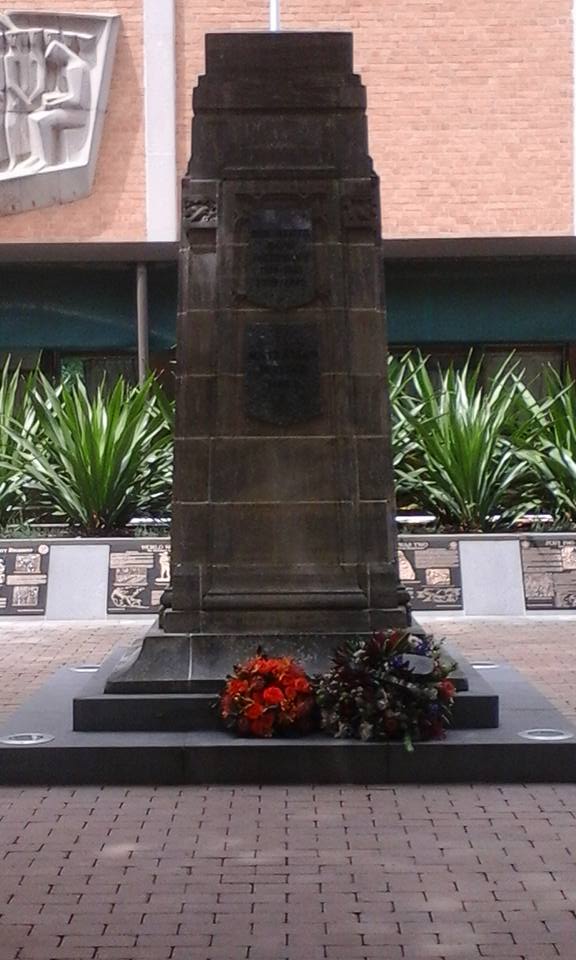
The University of Melbourne landscape has a number of reminders of the Fisrt World War all around. For instance, only a small portion of the larhe wrought iron fencing remains on Grattan street. It used to encircle the entire university campus. In the 1888 Building, our graduate building, you can see a list of names and many photos of the students from the university who fought and died in WWI. The University had it's own cadet regiment at thE time. There is also a patriotic looking stained glass window from the period. There is also an obolisk dedicated to all who fought near South Lawn, surrounded by cuttings of the wild rosemary which grows on the hills of Gallipoli. Seeing as how 2015 marks the centenary of the Gallipoli campaign, a seedling of the Lone Pine was planted near Wilson Hall with a comemorative and military ceremony.
I was fortunate enough to visit the shores and hills of Gallipoli in 2008 as part of the overseas intensive subject, The Greco-Roman City in Antiquity, and it was a very serene place and a humbling, quiet, reflection inducing experience for our group whether international students, or Australian students, whether they had family there or not, it struck a sombreing cord.
I didn't know it at the time, but on ANZAC Day 2015, 25th of April, for all our Australian and New Zealand military people who served in any and all capacities, I found out I had a Hallett relative who died at Gallipoli. We found his death penny in my Great Uncle's old things. Albert Hallett, not my direct ancestor but a relative. This too was an interesting and unexpected discovery to be proud of.
https://www.awm.gov.au/people/rolls/R1835301/
http://discoveringanzacs.naa.gov.au/browse/records/267211/4
And here is a couplke of photos from campus that day:
 |
| The Lone Pine seedling |
 |
| The Obolisk |
Tabletop Catapult

I think everyone should have a tabletop catapult (it's a nifty pencil sharpner too!). Great for fireing peas, beans or corn from one end of a dining table to another. Come Easter, also great for launching boulders of Easter egg foil and come Christmas, a handy way to "share" unwanted bonbon pieces.
The word catapult derives from the Ancient Greek word Katapeltes, from Kata -"against", and pallein - "to hurl", "to throw" thus it is a siege engine "to hurl" [rocks, projectiles etc] "against" [walls, forts etc]. Marvelous how language works sometimes, even if quite literal in description.
Medieval European banquets opten had small catapults capble of casting fruit, vegetables, bread, or small blocks of cheese from one end of the long feasting tables to another.
Ancient Bling for Modern Lives
Museum shops around the world, both instore gift shops and their online counterparts, have a wonderful variety of replica artifacts or artifact-inspired pieces. Nowhere is this more apparent, not to mention glamerous, than in modern jewellry. Sometimes it is quite forward to simply get a jewller to imitate the work of an ancient craftsperson - all be it with modern technology, magnification, electroplating etc - but sometimes it is extremly difficult, even almost impossible to replicate some of those generations of skills devloped to make something incredibly small, intricate and fine, let alone do it as they once would have. Sometimes though, new jewellry can be created, inspired by ancient pieces like a broach based off a larger object or a bangle based off the design of a diadem.
Ancient bling for (your) modern lives!
Here are some pieces I checked out at the Metropolitan Museum of Art store (Melbourne outlet) http://www.themetstore.com.au/
Ancient bling for (your) modern lives!
Here are some pieces I checked out at the Metropolitan Museum of Art store (Melbourne outlet) http://www.themetstore.com.au/
 |
| Egyptian and Sumerian |
 |
| Egyptian and Javan |
 |
| Minoan, Mycenaean and Classical Greek |
 |
| Roman, Byzantine and Medieval Persian |
Friday, 27 May 2016
'ойся ты ойся' (oysia you osia) or "The Cossack Prayer"
ойся ты ойся
(facebook conversation/answer by me 23/1/2012) My
translation and interpretation of a Cossack song.'ойся ты ойся' is the phrase and is usually translated as Oysia you oysia. The reason you would have had trouble finding stuff on it is because the only actual word in the phrase is ты meaning you (singular), and ойся is an obscure exclamation so you won't find it most Russian dictionaries or literature, but with the sense of 'Oi!' and repeated for emphasis. So the phrase means something with the sense of "Oi (or hey) you oi!!!" Today it is often used to refer to the "mountain dance of the Cossacks", but it refers to a line, one of the most poignent lines, in either a joke or a song. The song, which accompanies the dance is known by a few names, 'Oysia you Oysia'(or 'oh-hsia you oh-hsia') or 'On the mountain there was a Cossack'.../'A Cossack standing on the mountain' after the first line (nameing folk songs after the first line was a common practice, but not a rule or anything). But one of the most common names for the song is the "Cossack Prayer" and I use parentheses (" ") for this because the so-called prayer is slightly humerous in either version. Nobody is sure if either the joke inspired the song or the song inspired the joke. I tend to think it makes sense that it was a real song refering to a real incident, with a dance later composed to the song and with a bit of time and nostelgia perhaps embellished a little, later joke coming up in reference to the song.
The "Cossack Prayer" song (which is what is being sung in the original video clip you posted) https://www.youtube.com/watch?v=AN3uhImuy6E&feature=related that accompanies the dance goes like this:
On the mountain there was a Cossack...he prayed to God.
For the freedom for the people he bowed low.
Chorus: (x2)
'Oysia! You oysia!
You do not worry.
I will not touch you -
Do not worry.'
And asked Cossack truth for the people.
[So that there]Will be truth on earth - will and freedom.
Cossacks asked for their friends, that they be in a strange land
[Thus] avoiding greed and hubris.
His wife waited, and fathers and children. Those who seek the truth, but his mother the wide world.
For of the people asked the Cossack, yes a blessing,
In order to have bread and salt, in peaceful villages.
To [let] no blood be spilled, the way of the threshold.
To let no falsehood be lived, he prayed to God.
So he prayed that Cossack, for native land,
That by sorrow, nor tears, would it be touched.
'Oysia! You oysia!
You do not worry. I will not touch you -
Do not worry.'
Brash, yet sincere he yells out to God the memorable line which on its own dosn't mean much, but here has a sense of 'Hey! You hey!!!' and once he has the xtian god's attention, he reassures 'the almighty' that it is okay, he might be as close as he can get but he still cannot touch (or harm) God. This is the humerous (though also intended to be spiritual on another level) part of the song - that a man who is a warrior, but is in the open, vulnerable to an enemy ambush or to the forces of nature (and in doing so is almost challenging them) prays. Not to mention this scene could very well be before a battle. And what he prays about speaks to the very heart of Cossack identity and tradition because he is thinking about friends and family, honour, loyalty, service, faith/truth and peace/security for his village and region - if necessery a peace secured by fighting to the death to defend it. But because he is not just any (assumed xtian) warrior, but a Cossack, 'dashing' and dareing, he is not even concerned to call out to God as if he were some person nearby, without titles or elaborate ritual.
So you can see why Cossacks, or people descended from
some today would love this song as an almost unoffical anthem, because to them it
is loaded with layers of meaning about what it means to be a Cossack, with a
combination of boldness and yet an almost comical simplicity (yelling out to
God on a mountain top) presented in a bit of an understatement, which gives it
all the more profoundness. You can see though that this also is delibretly
romantic/nostalgic rendition though, so it's obviously meant to be very pro
Cossack.
The joke (seems) deliberatly designed to take a look at
this a bit more irreverantly. The comedy of the joke, sort a poem/short story
than can be sung in its own right is more about the stereotypes and contrast
rather than any laugh out load funny lines. It starts with the same incidence
of the prayer, except that the Cossack is identified as Shamil (which is a
Chechen name - so I'm not too sure i that identification is correct - but again
it varies with the version) and depending on the version he has been biten on
the leg by a donkey, and he adds to his prayer that he would like a sword and
will do a dance. And it contrasts the Cossacks (the Christian foreigners in the
area, military, on horseback, long-coats, woolen hat etc) with the Chechen youth
(Muslim, local, hangs around the markets, naked because he's been swimming). He
aproaches a Cossack and tells him he bought a pig to make a stew (which being
Muslim is unlikely), and rides away with no pants or boots. Another version of
the joke talks about the beauty but danger of the Caucasus, the youth being
armed and ends up mentioning a goat on a bridge (ie like a man on a mountain). The
Chechen and/or Shamil bits usually come from the joke ones. So they can be
harder to interpret because they are a little more vague and abstract in
construction.
Forward...
Forward I go with the blog again...
Been some pretty hectic times of late, but the latest review went well, the latest thesis chapter is looking good and just today I was at the latest Honours Classics and Archaeology mini conference providing questions and feedback on presentations. I have to say, that although I have attended a number of these before, I am always impressed with the diversity and quality of the presentations that come out of ther Honours program here. Well done folks!
Been some pretty hectic times of late, but the latest review went well, the latest thesis chapter is looking good and just today I was at the latest Honours Classics and Archaeology mini conference providing questions and feedback on presentations. I have to say, that although I have attended a number of these before, I am always impressed with the diversity and quality of the presentations that come out of ther Honours program here. Well done folks!
Wednesday, 23 December 2015
PhD Coursework Seminars with Professor Gil Stein
PhD Coursework Seminars with Professor Gil Stein
Dean Hallett
One concern of Classics and Archaeology postgraduates in the past has been the lack of discipline relevant coursework available for us to undertake toward completing our coursework component. This year we were tremendously fortunate to have two advanced archaeology intensive subjects taught by Professor Gil Stein, Director of the Chicago Oriental Institute. The two intensive subjects ran back to back over September. Admittedly, few of us needed to undertake the subjects for our course credit requirement, however with such a great opportunity, a group of us actively participated in the class readings, presentations and discussions.
The first of these two intensive subjects was called “Centralisation and Control in Antiquity” with a particular focus on early Mesopotamian city-states. The subject was about critically examining ancient states and the archaeological, textual and iconographical evidence for their claims to centralised power and authority. This involved a further analysis of states, models of state origins and organization and applying this to interpreting early urbanism, trade, bureaucracy and kingship. A main theme was investigating the inherent tensions between centripetal forces pulling a state to greater centralisation and the various centrifugal forces diverging and pushing against centralization. The result: a working, fluctuating compromise that is a state society. Some of these concepts were familiar ground for us, others new and intriguing. What Professor Stein did was teach in such a way that really illuminated such ideas, pulled them apart critically in light of his own fieldwork in Syria (including Raqqa) and Iraq and left us well equipped to make our own conclusions.
The second subject was called “Inter-Regional Interaction in Antiquity” within and between different regions or zones in the ancient Near East. Politically and economically when early states or empires encountered other less complex states or “chiefdoms”/“incipient complex societies” a range of interactions could take place. This subject explored the different kinds of interactions that could take place through a range of hierarchical and non-hierarchical models of cultural contact and their archaeological theory applications. These included world systems theory, colonialism, acculturation, hybridity, interaction spheres and trade diasporas. This subject built on the knowledge and skills that we had been developing in the first subject and took applying them to the next level, by examining the interactions between different kinds of societies and between different regions such as Mesopotamia, Anatolia, the Caucasus, the Central Asian Steppe and the Iranian Plateau. Professor Stein’s vast knowledge, experience of working in Iran and Afghanistan, and sense of humour helped us all to put these ideas in perspective and provided new approaches that we could all apply to our own research projects.
While he was at the University of Melbourne, Professor Stein also kindly gave a couple of other lectures. As part of our department’s popular Ancient World Seminar Series, he gave the lecture “Persian Personae: Material Culture, Ethnicity and Elite Identity in the Achaemenid Tombs from Hacinebi Turkey” to an interested audience of staff and students. He also gave a public lecture “Sweet Honey in the Rocks: Honey, Bees and Beekeeping in the Ancient Near East” as the 2015 Marion Adams Memorial Lecture. This really was a phenomenal lecture on the often overlooked, fascinating world of bees, ancient apiary, and honey in all its properties and applications. As an avid bee-keeper himself (even looking at a new Australian bee hive design while here), Professor Stein could share a lot of hands-on experience in addition to research and enthusiasm. The packed public theatre buzzed with excitement and applause afterward!
Our group also took Professor Stein, and his wife, on an expedition across the Carlton Gardens to have an Australian pub meal. This provided a lot of casual discussion where we were all able to discuss our interests, swap stories, share a laugh and attempt to explain some Australianisms.
We want to again thank Professor Stein and his wife for coming to our university and spending so much time with the postgraduate group. We hope they had an exceptional experience and enjoyed the gift made on behalf of the group, a bottle of mead (honey-wine). I believe we all learnt a lot over that month and we are grateful to have had this opportunity.
Dean Hallett
One concern of Classics and Archaeology postgraduates in the past has been the lack of discipline relevant coursework available for us to undertake toward completing our coursework component. This year we were tremendously fortunate to have two advanced archaeology intensive subjects taught by Professor Gil Stein, Director of the Chicago Oriental Institute. The two intensive subjects ran back to back over September. Admittedly, few of us needed to undertake the subjects for our course credit requirement, however with such a great opportunity, a group of us actively participated in the class readings, presentations and discussions.
The first of these two intensive subjects was called “Centralisation and Control in Antiquity” with a particular focus on early Mesopotamian city-states. The subject was about critically examining ancient states and the archaeological, textual and iconographical evidence for their claims to centralised power and authority. This involved a further analysis of states, models of state origins and organization and applying this to interpreting early urbanism, trade, bureaucracy and kingship. A main theme was investigating the inherent tensions between centripetal forces pulling a state to greater centralisation and the various centrifugal forces diverging and pushing against centralization. The result: a working, fluctuating compromise that is a state society. Some of these concepts were familiar ground for us, others new and intriguing. What Professor Stein did was teach in such a way that really illuminated such ideas, pulled them apart critically in light of his own fieldwork in Syria (including Raqqa) and Iraq and left us well equipped to make our own conclusions.
The second subject was called “Inter-Regional Interaction in Antiquity” within and between different regions or zones in the ancient Near East. Politically and economically when early states or empires encountered other less complex states or “chiefdoms”/“incipient complex societies” a range of interactions could take place. This subject explored the different kinds of interactions that could take place through a range of hierarchical and non-hierarchical models of cultural contact and their archaeological theory applications. These included world systems theory, colonialism, acculturation, hybridity, interaction spheres and trade diasporas. This subject built on the knowledge and skills that we had been developing in the first subject and took applying them to the next level, by examining the interactions between different kinds of societies and between different regions such as Mesopotamia, Anatolia, the Caucasus, the Central Asian Steppe and the Iranian Plateau. Professor Stein’s vast knowledge, experience of working in Iran and Afghanistan, and sense of humour helped us all to put these ideas in perspective and provided new approaches that we could all apply to our own research projects.
While he was at the University of Melbourne, Professor Stein also kindly gave a couple of other lectures. As part of our department’s popular Ancient World Seminar Series, he gave the lecture “Persian Personae: Material Culture, Ethnicity and Elite Identity in the Achaemenid Tombs from Hacinebi Turkey” to an interested audience of staff and students. He also gave a public lecture “Sweet Honey in the Rocks: Honey, Bees and Beekeeping in the Ancient Near East” as the 2015 Marion Adams Memorial Lecture. This really was a phenomenal lecture on the often overlooked, fascinating world of bees, ancient apiary, and honey in all its properties and applications. As an avid bee-keeper himself (even looking at a new Australian bee hive design while here), Professor Stein could share a lot of hands-on experience in addition to research and enthusiasm. The packed public theatre buzzed with excitement and applause afterward!
 |
| Scene from the Tomb of Rekhmire (18th Dynasty) showing the gathering of honey from ancient Egyptian beehives. |
Our group also took Professor Stein, and his wife, on an expedition across the Carlton Gardens to have an Australian pub meal. This provided a lot of casual discussion where we were all able to discuss our interests, swap stories, share a laugh and attempt to explain some Australianisms.
We want to again thank Professor Stein and his wife for coming to our university and spending so much time with the postgraduate group. We hope they had an exceptional experience and enjoyed the gift made on behalf of the group, a bottle of mead (honey-wine). I believe we all learnt a lot over that month and we are grateful to have had this opportunity.
How Old is the Melbourne University Scandinavaian Club?
How old is Scandinavian Club?
By Dean Hallett on Monday, 2 April 2012 at 17:24

We
often get asked 'Just how old is Scandinavian Club anyway?'. The short
answer is usually - we don't know. It has been lost somewhere in the
mists of time.
So far attempts to find out from the student union havn't yielded much. They only keep records for a certain number of years. And they are not there to be our personal archivists, but have to work long hours just to keep the Clubs and Societies of today's University of Melbourne going. Likewise a bit of time searching the web has not revealed anything either.
In my own experience, I know that club has existed largly in its present form with the usual cycle of core events and weekly game of kubb accompanied by pizza and conversation since 2006, when I started my first degree and studying Swedish. Admittedly, my own classes often clashed with Scandinavian Club, so I didn't become a regular until 2009. The oldest emails in the club email account indicate that the club was affiliated with the student union at least since March 2006. In 2005 I took modern history at the university of melbourne for a year while still studying in year 12 and was vaguely aware that the club existed, which was later re-enforced as I went to a seminar on Open Day in the middle of that year where Scandinavian Club was spoken about in relation to the Swedish department.
I have been able to track down a few photos (viewable in our photos on this page) which show that we had the flags from 2007, the Swedish flag from at least 2006 and the kubb set from at least early 2005.
Recently I stumbled across an extract from the Department of German, Russian and Swedish (http://grs.unimelb.edu.au/activities_and_links/clubs_and_social_activities.html) :
Melbourne University Scandinavian Club
What is it?
The Melbourne University Scandinavian Club is a cultural and social group consisting mainly of students of Melbourne University and young Scandinavians visiting Melbourne.
What do we do?
The club hosts social gatherings, such as pizza nights, pub crawls, film viewings, etc, as well as an annual camp. The club also liaises with other overseas interest clubs, both at Melbourne and other universities, providing opportunities for cultural exchange with non-Scandinavian oriented groups. It was in early 1999 that the club changed from the narrower-focussed "Bellman Society", which was a society only for students of Swedish at Melbourne University. Now, all interested parties are welcome to join.
Who are our members?
Members of the Melbourne University Scandinavian Club are active students, enthusiastic about travelling and passionate about their origin or interest in Scandinavia. At a time when students at universities across Australia are becoming ever less interested in the extra-curricular facets of university life, the mystique and fun typically associated in the minds of Australians with Scandinavia makes membership of the Scandinavian Club a unique experience which should not be missed!
Where can you get more information?
You can email us at scandinavianclub@hotmail.com
We hope to see you at our next event!
So the club at least goes back until 1999! And that prior to this it existed via a predecessor club the "Bellman Society" (in reference to the famous 18th C. Swedish poet Carl Michael Bellman). Interestingly they choose to decribe the Bellman Society as 'only for students of Swedish at Melbourne University' it looks as if it was a literature, poetry (and perhaps homework) orientated club rather than the more cultural/social club we have today.
This document is still a work in progress...so if you have any more information to add to it by all means.
Tak,
Dean Hallett,
President, Melbourne University Scandinavian Club. 2nd of April 2012.
UPDATE: Committee helper and club member, Harriet 'Chariot' Kulich began to do some searching and found the following article (http://www.radioaustralia.net.au/international/2010-08-25/australian-pacific-student-clubs-struggle/231980) which was aired on ABC National radio in 2012. The article by Maria Rita Skog, a former club member from Norway states:
UPDATE 2: According to the following link. the Bellman Society at Melbourne University was running in 1972 (if not before!) (http://understandascope.org/wp-content/uploads/2012/06/Everyday-Transcendence.pdf) Page 86(https://www.facebook.com/photo.php?fbid=859514690799133&set=gm.10155973881560554&type=1&theater)
UPDATE 3: It appears that Swedish had a lectureship at Melbourne University at least since 1969 and it is possible, ney probable that the Bellman Society was formed then, as an informal and/or faculty club, or between then and 1972 at the latest. The significance of 1989 is still unresolved, but it would make sense if that marks the time the Bellman Society became affiliated with the Student Union. Ten years later in 1999 marks the change of name and focus for the same club to become the Scandinavian Club as we know it. Interestingly Old Icelandic/Old Norse was the 6th language to be taught at the University from 1944! Augustin Lodewyckx gathered a group together after his second visit to Iceland which appears to have been the fully functioning earliest form of the Scandinavian club, the "Íslandsvinna félagiô [sic] (The Society of the Friends of Iceland)" [I think it should be félagið? Literally "fellowship"]. This group lobbied and suceeded in establishing Old Norse and by extension, Swedish which came into the same department in 1969, we believe. This group held weekly meetings, provided food, studied Scandinavian languages, taught Melbourne University students and lobbied for Scandinavian language study at Melbourne University, had an Icelandic flag and welcomed visiting Scandinavians and Scandinavians settling in Australia. Some of it's members and the Swedish lecturing staff were involved with the later Bellman Society, so The Society of the Friends of Iceland appears to be the earliest form of the Melbourne University Scandinavian Club back in 1939!!!'in 1939, he gathered together a group of people who were fascinated by his descriptions of his travels. The members of this group kept regular meetings at "Huize Eikenbosch", the Lodewyckx home, and adopted the name of Íslandsvinna félagiô (The Society of the Friends of Iceland).'See the following (which I was able to download from the University of Melbourne Library and upload into the club documents):StanleyMartin, J 2008, 'The teaching of Old Icelandic at the University of Melbourne 1944- 2007', Nordic Notes, vol. 12, pp. 6-17.The Anna Lodewyckx Scandinavian Scholarship still exists, though few can access it (http://arts.unimelb.edu.au/award/anna-lodewyckx-scandinavian-scholarships)Sadly "Viking Studies" Old Icelandic finished in 2007. I was in that final year and helped co-ordinate and run the Symposium 'Vikings and their Enemies' as a send off for such a long standing and well loved area of study at the University of Melbourne. Some of the ex-Viking Studies students kept an Old Norse reading group with me, going over 2008 but by 2009 people were finishing degrees or moving on and the reading group ceased to be. Between 2008-2011 Medieval History subjects covering the Dark Ages and the Vikings were also systematically culled.Swedish was phased out between 2010-2012. In 2012 only advanced Swedish was offered for students who had completed the prerequisites and no new beginers or intermediate students were taken on. ( https://handbook.unimelb.edu.au/view/2012/888SW?output=PDF) By 2013 no Scandinavian languages, history, culture or literature were taught at the University of Melbourne. The Scandinavian Club had long been friendly with but not dependent upon faculty departments from the School of languages. This brings us to the present, where the Melbourne University Scandinavian Club is the last survivor of a long and rich history of Scandinavian languages, history and culture on campus.
Dean Hallett,President and Jarl, 26/08/2015.
So far attempts to find out from the student union havn't yielded much. They only keep records for a certain number of years. And they are not there to be our personal archivists, but have to work long hours just to keep the Clubs and Societies of today's University of Melbourne going. Likewise a bit of time searching the web has not revealed anything either.
In my own experience, I know that club has existed largly in its present form with the usual cycle of core events and weekly game of kubb accompanied by pizza and conversation since 2006, when I started my first degree and studying Swedish. Admittedly, my own classes often clashed with Scandinavian Club, so I didn't become a regular until 2009. The oldest emails in the club email account indicate that the club was affiliated with the student union at least since March 2006. In 2005 I took modern history at the university of melbourne for a year while still studying in year 12 and was vaguely aware that the club existed, which was later re-enforced as I went to a seminar on Open Day in the middle of that year where Scandinavian Club was spoken about in relation to the Swedish department.
I have been able to track down a few photos (viewable in our photos on this page) which show that we had the flags from 2007, the Swedish flag from at least 2006 and the kubb set from at least early 2005.
Recently I stumbled across an extract from the Department of German, Russian and Swedish (http://grs.unimelb.edu.au/activities_and_links/clubs_and_social_activities.html) :
Melbourne University Scandinavian Club
What is it?
The Melbourne University Scandinavian Club is a cultural and social group consisting mainly of students of Melbourne University and young Scandinavians visiting Melbourne.
What do we do?
The club hosts social gatherings, such as pizza nights, pub crawls, film viewings, etc, as well as an annual camp. The club also liaises with other overseas interest clubs, both at Melbourne and other universities, providing opportunities for cultural exchange with non-Scandinavian oriented groups. It was in early 1999 that the club changed from the narrower-focussed "Bellman Society", which was a society only for students of Swedish at Melbourne University. Now, all interested parties are welcome to join.
Who are our members?
Members of the Melbourne University Scandinavian Club are active students, enthusiastic about travelling and passionate about their origin or interest in Scandinavia. At a time when students at universities across Australia are becoming ever less interested in the extra-curricular facets of university life, the mystique and fun typically associated in the minds of Australians with Scandinavia makes membership of the Scandinavian Club a unique experience which should not be missed!
Where can you get more information?
You can email us at scandinavianclub@hotmail.com
We hope to see you at our next event!
So the club at least goes back until 1999! And that prior to this it existed via a predecessor club the "Bellman Society" (in reference to the famous 18th C. Swedish poet Carl Michael Bellman). Interestingly they choose to decribe the Bellman Society as 'only for students of Swedish at Melbourne University' it looks as if it was a literature, poetry (and perhaps homework) orientated club rather than the more cultural/social club we have today.
This document is still a work in progress...so if you have any more information to add to it by all means.
Tak,
Dean Hallett,
President, Melbourne University Scandinavian Club. 2nd of April 2012.
UPDATE: Committee helper and club member, Harriet 'Chariot' Kulich began to do some searching and found the following article (http://www.radioaustralia.net.au/international/2010-08-25/australian-pacific-student-clubs-struggle/231980) which was aired on ABC National radio in 2012. The article by Maria Rita Skog, a former club member from Norway states:
The Melbourne University Scandinavian Club, which had very few students, was founded in 1989 and is still running. Its growth fuelled an international exchange cooperation agreement between universities in Australia and Scandinavian countries.A search of the Melbourne University Scandinavian Club's facebook group found Maria, and upon asking her, it was indeed the same journalist. We were able to confirm that she found this information on the old homepage and called the contact number listed. She confirmed that she was told it was founded in 1989! Thus adding a decade onto the known history of "Skandi club." We are very glad to have found this out!!Tak,Dean Hallett,President, Melbourne University Scandinavian Club. 19th of August 2015.
UPDATE 2: According to the following link. the Bellman Society at Melbourne University was running in 1972 (if not before!) (http://understandascope.org/wp-content/uploads/2012/06/Everyday-Transcendence.pdf) Page 86(https://www.facebook.com/photo.php?fbid=859514690799133&set=gm.10155973881560554&type=1&theater)
UPDATE 3: It appears that Swedish had a lectureship at Melbourne University at least since 1969 and it is possible, ney probable that the Bellman Society was formed then, as an informal and/or faculty club, or between then and 1972 at the latest. The significance of 1989 is still unresolved, but it would make sense if that marks the time the Bellman Society became affiliated with the Student Union. Ten years later in 1999 marks the change of name and focus for the same club to become the Scandinavian Club as we know it. Interestingly Old Icelandic/Old Norse was the 6th language to be taught at the University from 1944! Augustin Lodewyckx gathered a group together after his second visit to Iceland which appears to have been the fully functioning earliest form of the Scandinavian club, the "Íslandsvinna félagiô [sic] (The Society of the Friends of Iceland)" [I think it should be félagið? Literally "fellowship"]. This group lobbied and suceeded in establishing Old Norse and by extension, Swedish which came into the same department in 1969, we believe. This group held weekly meetings, provided food, studied Scandinavian languages, taught Melbourne University students and lobbied for Scandinavian language study at Melbourne University, had an Icelandic flag and welcomed visiting Scandinavians and Scandinavians settling in Australia. Some of it's members and the Swedish lecturing staff were involved with the later Bellman Society, so The Society of the Friends of Iceland appears to be the earliest form of the Melbourne University Scandinavian Club back in 1939!!!'in 1939, he gathered together a group of people who were fascinated by his descriptions of his travels. The members of this group kept regular meetings at "Huize Eikenbosch", the Lodewyckx home, and adopted the name of Íslandsvinna félagiô (The Society of the Friends of Iceland).'See the following (which I was able to download from the University of Melbourne Library and upload into the club documents):StanleyMartin, J 2008, 'The teaching of Old Icelandic at the University of Melbourne 1944- 2007', Nordic Notes, vol. 12, pp. 6-17.The Anna Lodewyckx Scandinavian Scholarship still exists, though few can access it (http://arts.unimelb.edu.au/award/anna-lodewyckx-scandinavian-scholarships)Sadly "Viking Studies" Old Icelandic finished in 2007. I was in that final year and helped co-ordinate and run the Symposium 'Vikings and their Enemies' as a send off for such a long standing and well loved area of study at the University of Melbourne. Some of the ex-Viking Studies students kept an Old Norse reading group with me, going over 2008 but by 2009 people were finishing degrees or moving on and the reading group ceased to be. Between 2008-2011 Medieval History subjects covering the Dark Ages and the Vikings were also systematically culled.Swedish was phased out between 2010-2012. In 2012 only advanced Swedish was offered for students who had completed the prerequisites and no new beginers or intermediate students were taken on. ( https://handbook.unimelb.edu.au/view/2012/888SW?output=PDF) By 2013 no Scandinavian languages, history, culture or literature were taught at the University of Melbourne. The Scandinavian Club had long been friendly with but not dependent upon faculty departments from the School of languages. This brings us to the present, where the Melbourne University Scandinavian Club is the last survivor of a long and rich history of Scandinavian languages, history and culture on campus.
Dean Hallett,President and Jarl, 26/08/2015.
Emotions and Archaeology Part 3
My Own History of
Archaeology and Emotion
In my experience,
finding that you may have developed some kind of emotional attachment to
subjects of archaeological study can be surprising but is nonetheless a very
human thing to do. When you spend so much time researching different cultures
deeply, you develop not only knowledge on a topic, but a degree of
understanding about that culture. Sometimes you inadvertently come to have a
closer attachment to some ancient sites, cultures or classes of objects over
others because you “know them better” almost like an old friend that you have
not crossed paths with for a long time. Archaeologists also frequently return
to work on the same site in a foreign land year after year and so I also wonder
to what extent do we emotionally connect our experiences of travel with a
modern community in a distant land, with their predecessors and in relation to
ourselves. Other countries and their customs can be strangely familiar and yet
alien at the same time. Working with the ancient past can intensify those
emotions all the more if you find yourself well acquainted with the distant
past, and yet realise that ultimately it is after all but a reconstruction of
the past. The reality is, that every step in an archaeological process from
excavating and recording a site to writing about ancient things, even those
rediscovered and excavated long ago involves the emotions of the archaeologist
too, not merely the analysis of emotion in the ancient world. Emotion affects
our thirst for knowledge. It affects our drive to explore the past. Our past
emotional experiences put us on a path of discovery and they continue to affect
how we relate to our own research.
I can even note the
history of emotion apparent in my own research. My PhD thesis is on investigating
the spread of chariots and chariot related technology throughout the ancient
Near East; and beyond into adjacent regions from the Middle Bronze Age to the
Early Iron Age. Clearly my own interests both emotional and intellectually have
lead me to want to investigate this topic and write extensively on it.
Certainly growing up on acreage on the urban-rural fringe of Melbourne where
there are horse trails and people often have a horse or two must have
contributed to a familiarity and emotional connection between myself and horses
and horsemanship. Likewise, if not for my studies, mentors and emotional
experiences in my studies than I would not be undertaking this research at this
institution. In my final undergraduate year I took considerable care to draft
some preliminary Honours thesis topics and email several of my lecturers for
feedback. The feedback was invaluable but I realised all of my proposed topics
involved cultures that placed a great emphasis on chariots and/or horses. So I
decided to write on the origins of chariot warfare in the ancient Near East.
This in turn inspired the next natural chapter in this narrative to continue my
research. Although my current research is not centred around emotions per se, I can see how the culmination of
a history of emotions and experiences has lead to me researching my thesis
topic at this point. A history of emotions, a personal affective cartography,
has inspired and driven my archaeological research.
Conclusion
Having turned the wheel
full circle in a reflection on the study of emotions and archaeology, we now
end where we began. Emotions are both an affect and effect of human
experiences. They have implications across our society today, whether it be an
instant of emotion in a moment for an individual to influencing a vast array of
factors that influence our lives and our world. It must surely be true that
emotion must have profound and far reaching implications on actions and decisions
throughout history, and even beyond into prehistory. Therefore the study of
emotions should be a useful discourse for those who research the past: whether
historians, classicists, art historians, archaeologists or others further
still. Unfortunately, emotion and rational intellectual discourse have long
been considered antithetical to each other, if not mutually exclusive. More
recent research, especially interdisciplinary study of the history of emotions
is leading to more open dialogue about the importance and role of emotions in
different human societies and the different disciplines which study these
societies. This appears to offer archaeology as a discipline a new way for
better understanding the ancient past and yet archaeology has been cautious to
engage much with this emerging paradigm of writing emotion into our
archaeological heritage. Why exactly this has been the case is difficult to
say. In part the general academic aversion must be a factor. In archaeology
this is exacerbated by the nature of a descriptive and analytical discipline
focused around finds, in context, of material remnants of the past. The
difficulties in defining emotion consistently, in ascertaining what would constitute
archaeological evidence of emotion are also contributing factors. I think
navigating the intricacies of emotions from ancient cultures vastly removed
from our own in time and space presents a serious challenge of studying
emotions for which we may not understand or have a parallel for today,
something which is significantly more complex than studying an object or early
technological process of which we no longer have an equivalent of today. The
final challenge is for archaeologists to be able to identify and claim their
own emotional interactions with their research and better understand the role
of emotions not only in the lives of those that lived long ago, but in their
own lives as well.
-----------------------------------------------------------------------------------------------------------------------------
Bibliography.
AHR.
2012 “AHR Conversation: The Historical Study of
Emotions,” American Historical Review
(December 2012) 1486-1531.
Dixon, Thomas.
2012 “Emotion: History of a Keyword in Crisis,” Emotion Review 4.4: 338-344.
Frevert, Ute.
2011 Emotions in History: Lost and Found. Budapest: Central European University Press.
2011 Emotions in History: Lost and Found. Budapest: Central European University Press.
Gammerl, Benno.
2012 “Emotional Styles – Concepts and Challenges,” Rethinking History 16.2: 161-175.
Kramer, Samuel Noah.
1979 From the
Poetry of Sumer: Creation Glorification and Adoration. Berkley: University
of California Press.
Lutz, Katherine.
1988 Unatural
Emotions: Everyday Sentiments on a Micronesian Atoll and their Challenge to
Western Theory. Chicago: University of Chicago Press.
Matt, Susan.
2011” Current Emotional Research in History: Or, Doing History From the Inside Out.” Emotion Review 3: 117-124.
2011” Current Emotional Research in History: Or, Doing History From the Inside Out.” Emotion Review 3: 117-124.
Plamper, Jan.
2010 “The History of Emotions: An Interview with
William Reddy, Barbara Rosenwein, and Peter Stearns,” History and Theory 49: 237-265.
Robinson, Emily.
2010 “Touching the Void: Affective History and the
Imposible,” Rethinking History 14.4:
503-520.
Stearns, Peter.
1993
“History of emotions: The issues of change,” in Handbook of emotions, edited by Michael Lewis and Jeanette M.
Haviland, pp. 17–28. New York and London: Guildford Press.
Tarlow, Sarah.
2000 “Emotion in Archaeology,” Current Anthropology 41.5:
713-746.
Emotions and Archaeology Part 2
The Challenges of
Writing Emotion into the Past[1]
It therefore only makes sense that emotions should form part of the life cycle of the production/shaping, use, deposition, abandonment, rediscovery, excavation and eventual study of material culture from the past. So why has archaeology had so little to say about emotions? One concern could very well be, what do we mean by emotions and how do we define emotions? This could be a complex task and different scholars are likely to have widely varying approaches. With that said, perhaps archaeology could draw on definitions and approaches to the study of emotions found in other fields like history, literary analysis etc.
It therefore only makes sense that emotions should form part of the life cycle of the production/shaping, use, deposition, abandonment, rediscovery, excavation and eventual study of material culture from the past. So why has archaeology had so little to say about emotions? One concern could very well be, what do we mean by emotions and how do we define emotions? This could be a complex task and different scholars are likely to have widely varying approaches. With that said, perhaps archaeology could draw on definitions and approaches to the study of emotions found in other fields like history, literary analysis etc.
What evidence is there
for the expression emotions in the archaeological record? For some societies we
can look to the emotional language used in texts or inscriptions and visual representations
reflecting people experiencing emotions as represented in sculpture, paintings
and iconography. However in archaeology, the historical written or visual
record can be fragmentary – sometimes quite literally comprised of
reconstructed fragments. In other cases, a language or script may be undeciphered
and for prehistoric societies there is (by definition) no written record at
all. In such cases, this does not preclude archaeological investigation, it
merely hinders cross referencing finds with the additional cultural context
provided by written records, especially say mythological texts which can
sharply hone our understanding and interpretation of piece better than speaking
in more general terms. What a lack of texts, and where we have them, a lack of
sufficient surviving bodies of literature might do is prove a barrier to
studying emotion in the distant past. That said, I see no reason why the study
of emotions in the ancient past could not be attempted from what has survived,
and competing arguments could be weighed and contested from there.
How emotions are expressed
and represented, not to mention what constitutes an emotion can vary immensely
from culture to culture.[2]
Furthermore emotions can change or even become obsolete over time.[3]
It is often said metaphorically that the past is a different country. If this
is true, then archaeology, especially of ancient societies is confronted by not
only the challenge of understanding emotions in very different cultures to our
own. Often this is not only literally from a distant country, but across a vast
ocean of time when we look at societies separated by centuries if not millennia
from our own . So quite easily, what constitutes some emotions for us may not
constitute the same emotions or even count as an emotion for them at all. Conversely
we may have trouble recognising, interpreting and understanding some ancient
emotions if they differ vastly from our own. In such cases we would have to
translate emotions into concepts we can better understand.[4]
Nonetheless there is no easy answer to this. Introducing the study of emotions
to archaeology rather than the traditional more descriptive approach raises
many as yet unresolved questions and issues.
I think the other
concern archaeologists may have is the ‘unexplored anxiety that writing emotion
into the past necessarily involves empathy,’ and I would add; self-reflexivity.[5]
Archaeology can be a very descriptive discipline, as I have said above. It is one thing to describe artefacts and
sites, but another to try and discuss emotions. There is always the risk of
projecting views onto the past either consciously, which is a risk reduced by
accountability and peer review, or unconsciously, which doubtless historiography will note the
views that will one day be seen as symptomatic of our own time and place in
history. Discussing emotions as a discourse within archaeology, especially the
emotions of the archaeologists, could be seen as running the risk of blurring
the line between raising ideas in debate and projecting conscious or
unconscious ideas and norms of emotions onto the past. Perhaps the hesitancy
has more to do with an unvoiced fear of appearing unprofessional or unacademic in
admitting a passion for one’s chosen topic of research and not mere
intellectual problem solving. Speak with any expert in their field about their
research and that same passion as drive and motivation becomes readily
apparent. Indeed it is probably vital for sustaining long term projects over years of research and refinement. Clearly, in reality
interest and enthusiasm is not mutually exclusive with academic rigour, rather
it is conducive to sustaining it.
[1]
See also Robinson 2010 and Matt 2011.
[2]
Frevert 2011. See also Lutz 1988.
[3]
Loseing emotions from culture over time,
based on Medieval examples. Frevert 2011, pp. 19-86.
[4] For instance the concept of modern romantic
love is completely absent from Mesopotamian literature, does this mean that
they did not experience or did not express romantic love? Kramer 1979, pp. 74-75.
Subscribe to:
Posts (Atom)